
Live Different
Living Design:
A Manifesto on Housing, Humanity, and Balance
Live Different
Living Design: A Manifesto on Housing, Humanity, and Balance
The “Design Studio Writings” are a reflection of the ideas and values that guide Citra’s work. Drawn from our daily practice in the affordable sector, this collection of philosophies and observations represents the soul of our studio—exploring the deeper purpose behind our designs and defining not just how we build, but why it matters.
The South African Catalyst
In 2015, when Citra sought the ideal environment to launch operations, we chose the South African affordable market. It is a place of stark contrasts: troubled by the legacy of apartheid, heart-breaking inequality, high unemployment, and an immense shortage of quality housing, yet filled with resilience and potential. We realised that South Africa was the ultimate testing ground for our technologies—a place where innovation must stand up to reality before it can stand up to the world.
Since launching operations in 2016, this context has shaped us. We have collaborated with brilliant minds in design, urban planning, and engineering to become a leading developer of sustainable, affordable housing. But beyond the technical success, there remains a need to document the human experience of housing. This text is a contribution to that dialogue—a look at Citra’s philosophy in the context of real lives.
The Fragility of the Moment
Life is a precious, fragile thing. There are rare, quiet moments when this essence rises to consciousness and touches our hearts. A breathtaking sunset, children playing without a sense of time or fear, birds welcoming the dawn. Feeling life like this forces us to halt and be grateful. It makes us feel small, fading away in the face of our surroundings. This experience of space and time is the foundation of our motivation, desires, and hopes.
Citra’s designs aspire to create spaces that nurture a sense of belonging, connection, and security. By fostering these positive feelings, Citra’s environments aim to provide a foundation for moments of tranquility and well-being. When residents feel truly at home, they can achieve the emotional balance needed to succeed in life and appreciate its quiet joys. Having a home that fosters gratitude, even amidst hardship, lays the foundation of a peaceful life. A safe home, where anger and fear give way to calm, naturally empowers each person to embrace gratitude.
Designing an affordable home with a limited budget is the ultimate challenge for any architect. However, it is also an opportunity—for when successful, it can change lives. Thoughtful design transforms everyday spaces into sources of gratitude. Often, it’s the smallest details that achieve this: unique natural light during the day, the welcoming glow of artificial light visible from the street at night, the careful proportion of a bedroom, the tactile quality of a kitchen surface, or the position of windows and doors in relation to the street and garden.
The Neighbourhood as Social Fabric
In our quest to create spaces that foster gratitude for our residents, our design team at Citra examines everything—from the layout of the neighbourhood to the smallest detail. A well-designed neighbourhood balances families and individuals from different walks of life, creating opportunities for trust and mutual inspiration. It needs public spaces where people can meet and share ideas, and private places where they can retreat when they need solitude. Above all, it should allow every person to express themselves without imposing their beliefs on others.
The design of the home in relationship to the neighbourhood is crucial to its success. It influences how individuals and families feel about their community and can strengthen—or weaken—the fabric that holds it together. The orientation of a building, and the placement of its windows and doors, should prioritise neighbourhood impact before optimising for natural light, heat, or sound. Technical considerations matter, but they should never outweigh a home’s primary role in the neighbourhood: supporting a healthy social fabric. This is especially true in affordable housing, where space is limited and community is essential.
The Logic of the Floor Plan
The floor plan of a home is fundamental to a healthy and fulfilling life. Much of this wisdom comes from classical and vernacular architecture, re-interpreted for an affordable context. Bedrooms are the most private spaces in a home. They should offer protection from the world, and sometimes even from the intensity of family life—creating a safe refuge where one can retreat, restore, and be entirely oneself. Bedrooms belong as far from the entrance as possible, with doors that lock. A well-placed, well-designed bedroom supports healthy sleep, and only a rested body and mind can sustain a fulfilled life.
By contrast, the kitchen is where many families spend most of their time together—the heart of the home. It should face the public road, allowing a view of the entrance and the street. This simple orientation increases neighbourhood safety through the many eyes that naturally fall on the road, and it strengthens the sense of security at home, knowing that someone is often present in the kitchen, shielding the private areas of the house from the outside world.
Bathrooms should never face the road, especially on the ground floor. They are intimate, private spaces that exist solely to meet the physical and sanitary needs of the household. Corridors are an often overlooked tool for creating distance, intimacy, and protection. In affordable housing, where every square metre counts, corridors may seem like a luxury—yet when well-designed, they are pivotal to transforming a house into a balanced, liveable home.
The Architecture of Proportion
The height of rooms should be carefully considered. Drawing from Adolf Loos’ Raumplan and many vernacular designs, each room deserves a height as intentional as any other dimension. Living rooms and kitchens benefit from generous room heights, creating a gentle transition from the public life of the neighbourhood and family to the private, intimate life within bedrooms and bathrooms.
In bedrooms and bathrooms, we are at our most vulnerable. We are often naked, both emotionally and physically, and somewhat close to how we were in our mother’s womb. These rooms should enclose the body naturally, without feeling claustrophobic. There should be a comfortable, organic and natural relationship between these rooms and our bodies and minds.
The Right to Breathe
Especially in affordable housing, natural and mechanical ventilation are often disregarded, yet unhealthy living conditions are most commonly caused by a lack of fresh air. Mould, dust mites, and low oxygen levels cause numerous chronic illnesses that frequently go undiagnosed and prevent families—especially children—from reaching their full potential. Simple and often inexpensive measures such as passive cross-ventilation and mechanical extraction in bathrooms and kitchens can dramatically improve air quality.
The Language of Light
Natural light has been studied extensively, yet modern architecture often disregards the need for privacy and intimacy. Oversized openings may improve brightness, but they weaken insulation, increase costs, and often contradict a home’s most fundamental purpose: to protect its inhabitants from the outside world. Good natural lighting in an affordable home requires more than maximising window size. Each opening must be carefully placed to balance daylight, privacy, views of the outdoors, and protection from intruders.
The same applies to artificial lighting. A careful balance between passive, atmospheric lighting and focused, decorative lighting creates a welcoming home at night. Artificial lighting also shapes the relationship between a home and its neighbourhood. While light and atmosphere flow into the home during the day, this direction reverses at night. The warm glow of homes lighting the street reassures people returning from work that they are close to safety, comfort, and family. It calms the mind and projects the love and care from within the home out into the neighbourhood.
Protection over Romanticism
A home must meet more than emotional needs. It must fulfil a wide range of technical requirements: thermal and sound insulation, waterproofing, storm, hail and earthquake resistance, fire protection, and in some contexts even bullet resistance. All of these trace back to the core function of a home—to shield its inhabitants from the world.
This need for protection should never be viewed negatively. Humans have always held a deep respect for the forces of nature. Today’s urban, young generation embraces nature enthusiastically. Yet this romanticised desire for “natural living,” often associated with privileged urban classes, must never overshadow the need for protection from the elements among the less privileged.
Natural building materials such as timber, rammed earth, straw bale or bamboo can be beautiful and environmentally responsible, but they often do not provide sufficient protection in harsh climates or high-risk environments. Design must focus on the real needs and emotions of the user, without romanticising any aspect.
The Return to Organic Geometry
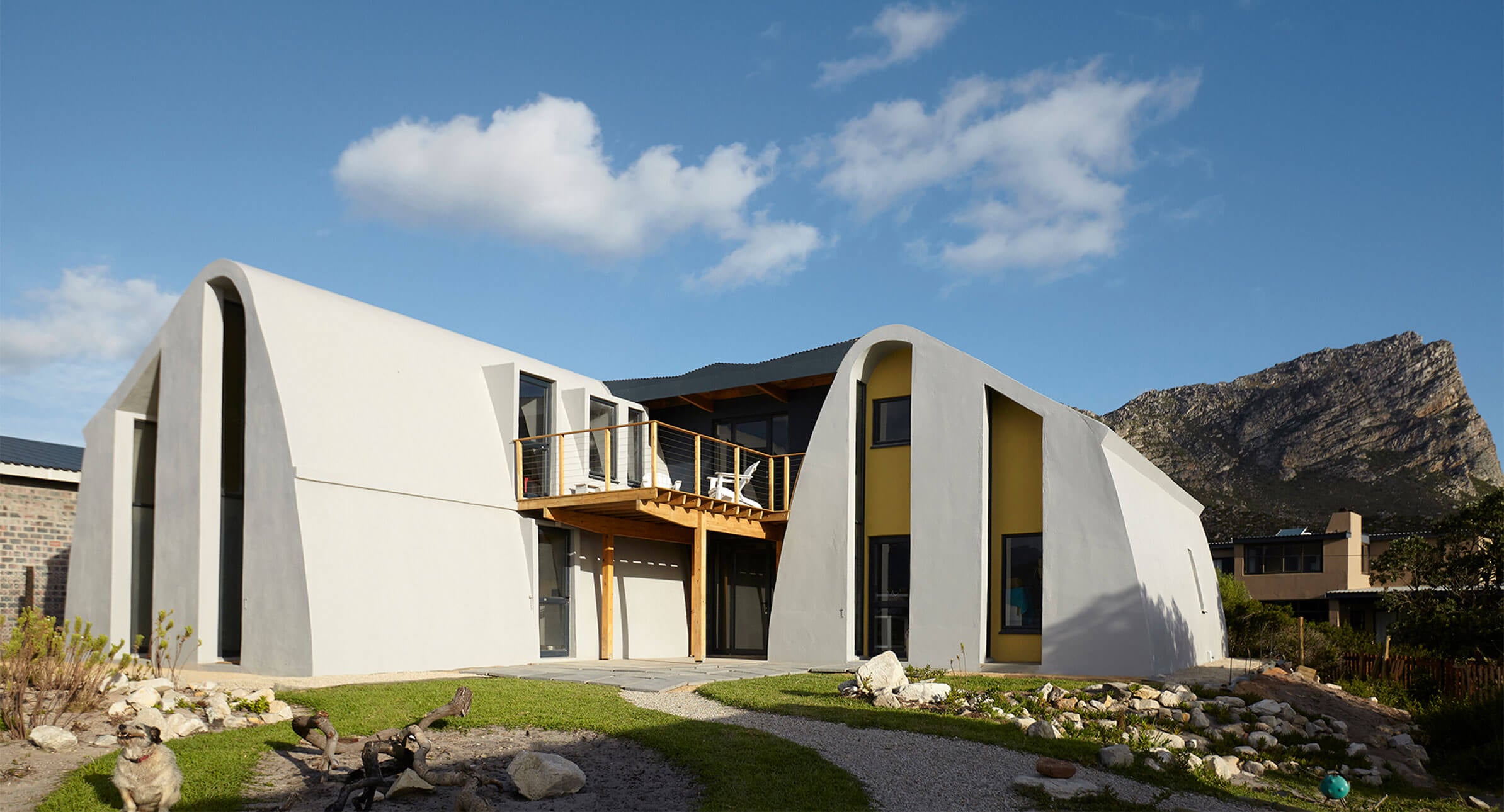
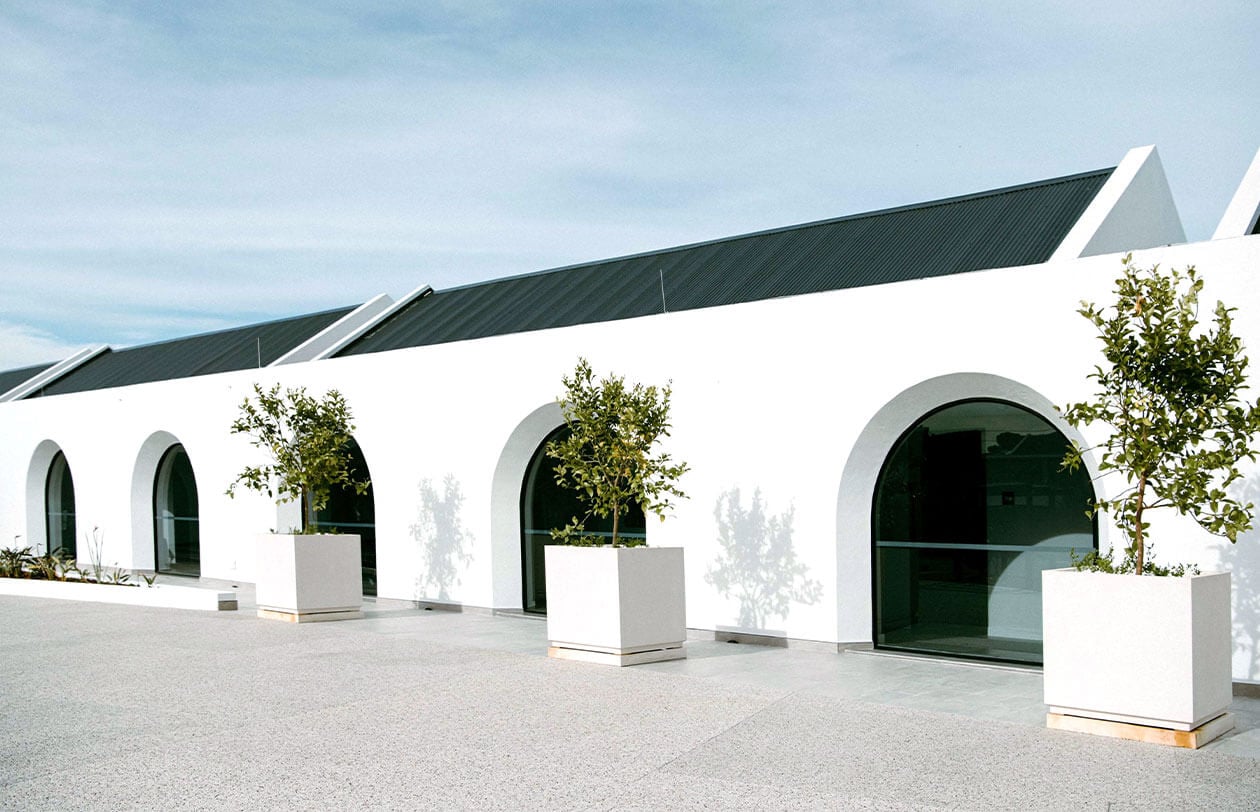
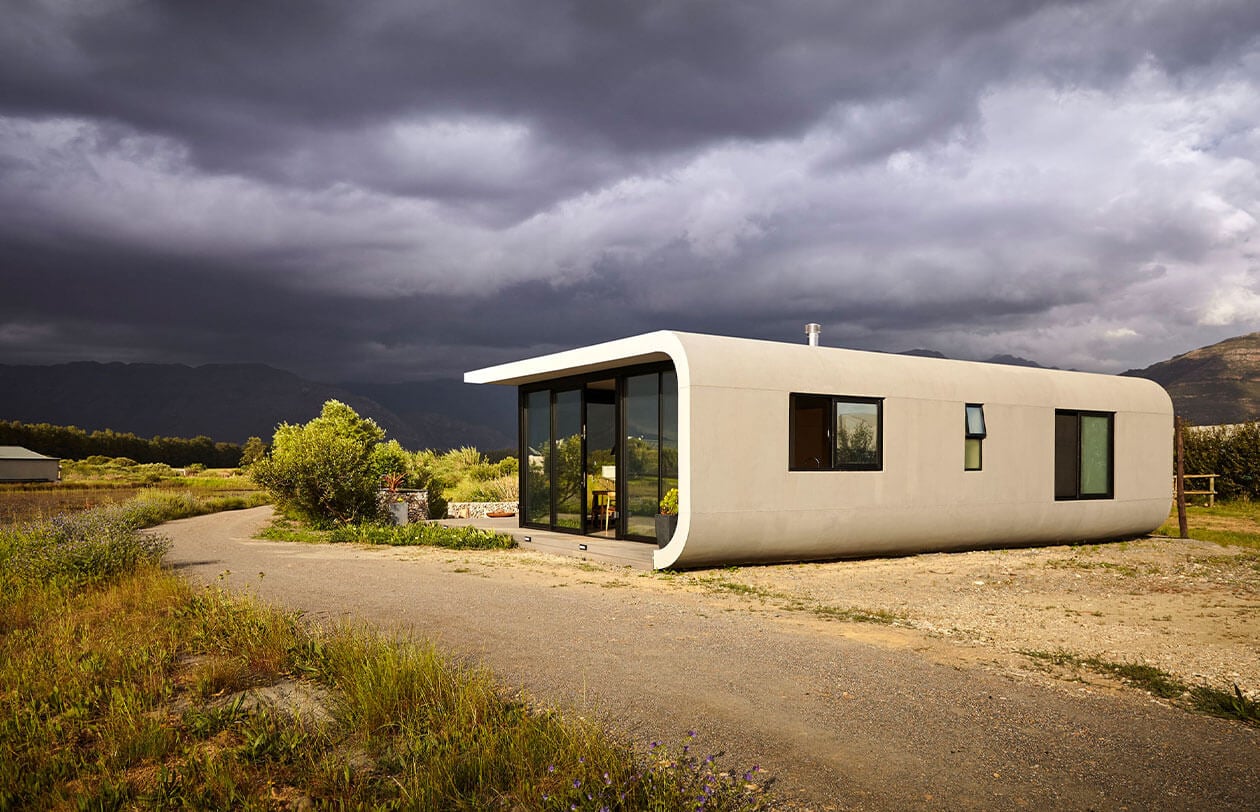
Humans need balance between contrasting forces. Citra’s design language seeks to break free from the “orthogonal chains” of industrial, conveyor-belt production. Nothing expresses civilisation’s victory over nature more radically than the straight line—a shape that rarely occurs in the natural world. While feeling “at home” requires a certain amount of human-made geometry to create distance from the raw forces of nature, the 19th and 20th centuries took this to an extreme. Modern architecture replaced arches and vaults with flat roofs and rectangular window openings, celebrating the triumph of humanity over a nature we believed we could control.
Today, with more than half the world living in man-made urban spaces, the scale is tipping: nature and natural geometry must find their way back into design. But restoring the balance between civilisation and nature requires more than just adding plants to buildings or planting rooftop gardens.
True balance demands a new design language rooted in geometries inspired by nature itself. This shift requires a fundamental breakthrough in how we build. Because organic forms are notoriously difficult to execute economically, their success depends on the integration of parametric design, finite element analysis, and abundant computing power. Tools like CNC cutting, 3D printing, and LiDAR sensors—linked by real-time data streams from construction sites to design offices—are the hard requirements for a future where organic design is both possible and affordable.
The Final Element: Heart and Humour
Design must excite; it must contain elements of surprise and a sense of humour. In affordable housing, projects are too often heartless, cold, and purely functional—but a home is much more than a house. A house is a functional building that fulfills technical needs; a home is the centre of our lives. It is where children grow up, where we love and hate each other, and where we hope to die in peace. This requires more than a functional layout; it requires heart from the designer.
A house without joy is merely a machine for survival, and we reject the idea that affordable living must be grim or heartless. By countering industrial rigidity with vibrant neighbourhoods, natural light, and organic form, we create sanctuaries for the messy, beautiful reality of life. We close this manifesto with a commitment to heart and the humanity at the core of our work. While our engineering is precise, our motivation is deeply human—ensuring that every Citra home is a place where the human spirit doesn’t just endure, but finds a reason to smile.
Influences & Admiration Citra draws inspiration from the works of Peter Zumthor, Adolf Loos, Alejandro Aravena, Antoni Gaudí, Santiago Calatrava, Roger Boltshauser, and Christiaan Conradie.
Get in Touch
Partners